


Unveiling Sauvignon blanc: Exploring its Secrets from Vineyards to Bottle (includes tasting)
January 29, 2025
12:45 pm - 2:30 pm
Unveiling Sauvignon blanc: Exploring its Secrets from Vineyards to Bottle (includes tasting)
Sauvignon Blanc stands out as one of the most versatile and increasingly popular grape varieties, with its consumption steadily rising over the past four years. What sets Sauvignon Blanc apart is its distinctive profile, characterized by vibrant acidity and expressive aromas. To further enhance these sought-after traits, winemakers employ a range of techniques, each method contributing to the wine’s unique character. This tasting session will explore these different styles from Washington, California, and New Zealand and the techniques at our disposal from vineyard practices to winemaking decisions presented by a winemaker from each region. How do we create thiols, and do we really want them? Elizabeth Tomasino from Oregon State, our moderator, along with Philippe Darriet from the University of Bordeaux help us understand the pathways for success.
Share This Page
Moderator
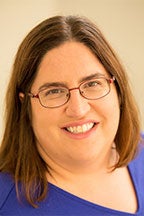
Elizabeth Tomasino
Oregon State University, Corvallis
Dr. Elizabeth Tomasino is a Professor of Enology at Oregon State University and a core member of the Oregon Wine Research Institute. She earned her Ph.D. in Oenology from Lincoln University in New Zealand, incorporating microbiology, winemaking, sensory science, chemistry and food science. She also holds an M.S. in Food Science from Cornell University. A Wine Enthusiast 2022 Wine Star Awards winner, Tomasino was named “Innovator of the Year” for her research on grape smoke exposure and smoke taint in wine.
Tomasino was project director of a USDA-NIFA Specialty Crop Research Initiative (SCRI) grant on grape smoke exposure (2021–2026), working with colleagues at the University of California, Davis and Washington State University. Her team discovered thiophenols, a new class of compounds that contributes to the ashy flavor of smoke-tainted wine. They are developing sprayable coatings that protect grapes from smoke compounds in the vineyard, and they have established natural baseline levels of smoke markers in Oregon and California grapes and wines. Their consumer research showed there is a market among some wine drinkers for smoke-impacted wines. Her smoke research continues with funding from the USDA Agricultural Research Service. In 2025 she chaired the American Society for Enology and Viticulture (ASEV) Smoke Taint Symposium, and she serves on the ASEV Board of Directors.
Her research program sits at the interface of wine chemistry and sensory science, linking chemical compounds to how people perceive them. Her projects have examined the role of chiral terpenes in aromatic white wines and used fuzzy set qualitative comparative analysis (fsQCA) to uncover the causes of fruity aromas. She has developed predictive models for tropical fruit aromas in white wine. Her group is also developing non-contact methods that selectively remove off flavors, such as reductive sulfur compounds, from wine.
She has worked on research projects with E & J Gallo, Yalumba Winery, Robert Mondavi Winery, Giesen Wine Estates and Pernod Ricard NZ, which fuels her interest in applied research. She brings her findings into her undergraduate and graduate teaching, and she speaks regularly to industry and international audiences. She is open to new ideas and collaborations and welcomes the chance to discuss and enjoy wine.
Speakers
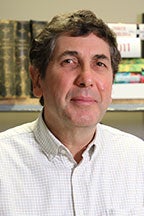
Philippe Darriet
University of Bordeaux, France
Prof Philippe Darriet is Managing Director of the Institute of Vine and Wine Sciences (ISVV) at the University of Bordeaux. Since his PhD thesis in 1993 on Sauvignon Blanc aroma, he has been doing research on the aromatic component of wines including Riesling, Cabernet Sauvignon and Merlot, Viognier, focusing on the trace odorant compounds involved in their typical aromatic nuances. He is interested in aroma-related aspects of viticulture, winemaking and aging processes. With his research group, his work has led to the publication of 100 peer-reviewed articles, some of them linked to interdisciplinary projects on aroma, in relation to the impact and adaptation to climate change, or on the sensory perception of wines by consumers.
Philippe recently coordinated the revision of the HandBook of Enology (Wiley) initiated under the direction of the late Pascal Ribéreau-Gayon (OIV prize in 2022). He teaches winemaking and sensory evaluation at ISVV, and participates in ISVV’s tasting training at Bordeaux University, where the DUAD (Diplome d’Aptitude à la Dégustation) celebrated its 50th anniversary in 2024. Philippe belongs to a family producing noble-rot sweet wines.
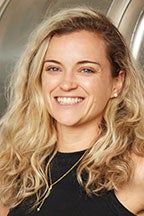
Ashley Egelhoff
Honig Vineyard and Winery, California
Born and raised in Los Angeles, it wasn’t until Ashley Egelhoff entered into her first year at UC Davis that she was introduced to the idea of winemaking as a career. Originally studying bio and life science, she quickly transferred to the Viticulture and Enology department after taking an Introduction to Winemaking course. After graduating from UC Davis with a BS in Viticulture and Enology, Ashley worked two harvests in Napa with an additional harvest in Argentina sandwiched in between. She joined the Honig team in 2012 as Enologist, was promoted into the role of Assistant Winemaker, and in 2023 moved into the role of Winemaker.
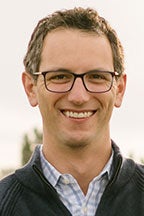
David Rosenthal
Partnership Wine Consulting, Washington
David is Winemaking Consultant with 24 years of winery experience in California, Oregon, Australia, New Zealand, and Washington state.
After graduating from the University of Puget Sound in 2001 with a degree in Marine biology, David got his start in Napa Valley as a harvest lab intern. David returned to Washington and joined Chateau Ste. Michelle as a lab technician through 2006. Realizing winemaking was his true passion and wanting to gain more experience, David took winemaking internships in Victoria, Australia and then in the Willamette Valley.
In 2007, David rejoined the Chateau Ste. Michelle winemaking team, ultimately taking on the role of Head White Winemaker in 2015. David continued the storied tradition of exceptional winemaking overseeing 3 million cases of annual production and adding to an extensive list of high scoring wines and accolades.
In 2023 David founded Partnership Wine Consulting and quickly built a roster of clients composed of some of Washington’s most iconic wineries. Without compromise David helps wineries craft small-lot, ultra-premium wines as well as larger nationally distributed wines.